
Criminal Cases in the Potter County Courts
Potter County felony cases belong in Texas district courts. The official docket page lists the 47th, 108th, 181st, 251st, and 320th District Courts, whose files are maintained by the Potter District Clerk. County Courts at Law Nos. 1 and 2 hear county-level matters that include misdemeanor dockets, with records kept through the County Clerk. Amarillo Municipal Court is a separate court of record for fine-only offenses and city ordinances within its jurisdiction.
Jurisdiction controls the file. The District Clerk cannot supply a County Court at Law record, and Amarillo Municipal Court does not hold a Potter County felony judgment. The 47th Judicial District covers both Potter and Armstrong Counties, though its district attorney prosecutes Potter felonies. Start with the charging level and court name shown on the citation, bond paper, or prior docket notice.
Fine-only Class C matters may remain at the municipal or justice-court level, while Class A and B misdemeanors ordinarily move through the County Courts at Law. Felonies, including state jail felonies, belong in district court. Enhancements can change the level, so do not classify a Potter County criminal case from a short booking label. The filed charging instrument and judgment give the reliable court level and result.
Which Potter Criminal Clerk
The most useful first question is who keeps the case. The Potter District Clerk maintains felony district-court files at 500 S. Fillmore Street, Suite 1B, Amarillo, Texas 79101. The office phone is (806) 379-2300. Staff will not conduct broad research for a requester, so bring a case number, defendant name, filing year, or other narrow identifier.
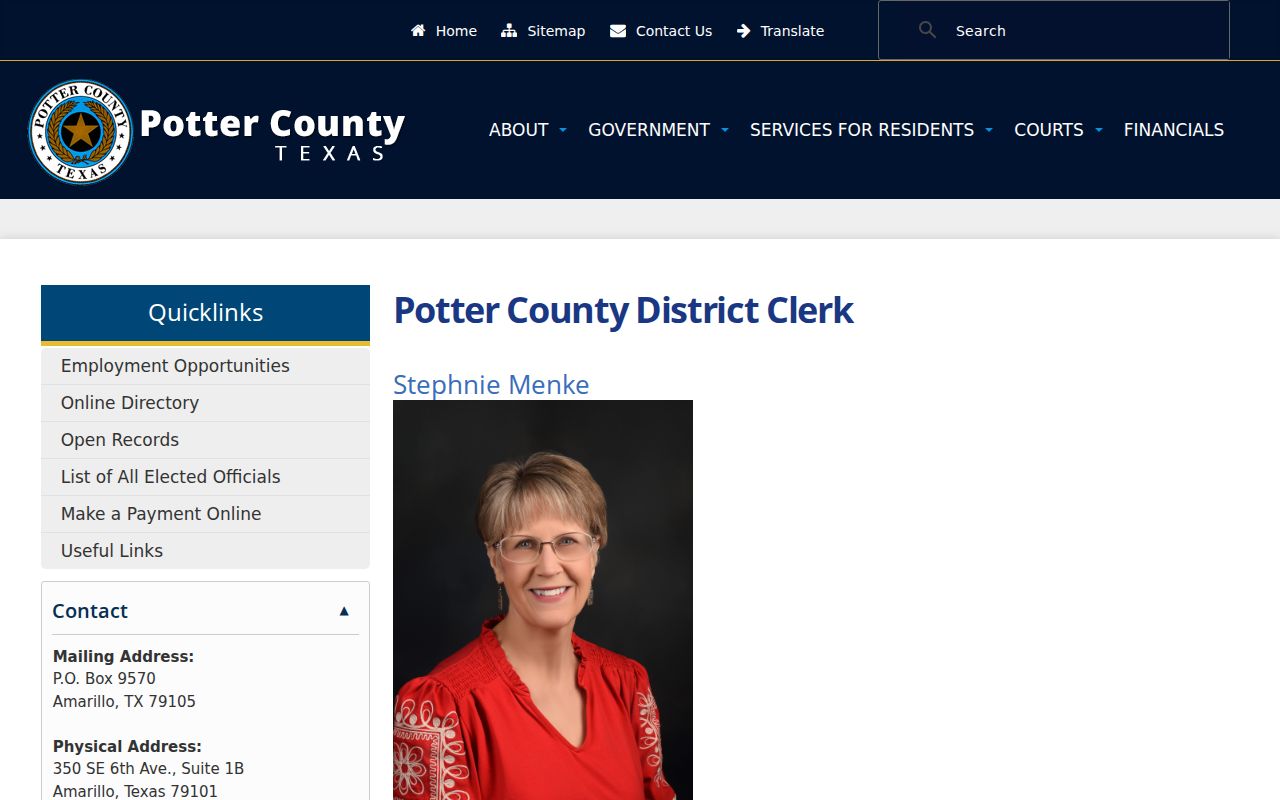
The clerk page is the source for current search notices, forms, fees, and court links. Certified copies cost more than plain copies, and the effective 2026 schedule should be checked before ordering.
The Potter County Clerk holds County Courts at Law records at 500 S. Fillmore Street. Its listed numbers are (806) 379-2275 and (806) 379-2288; confirm the correct division when calling.
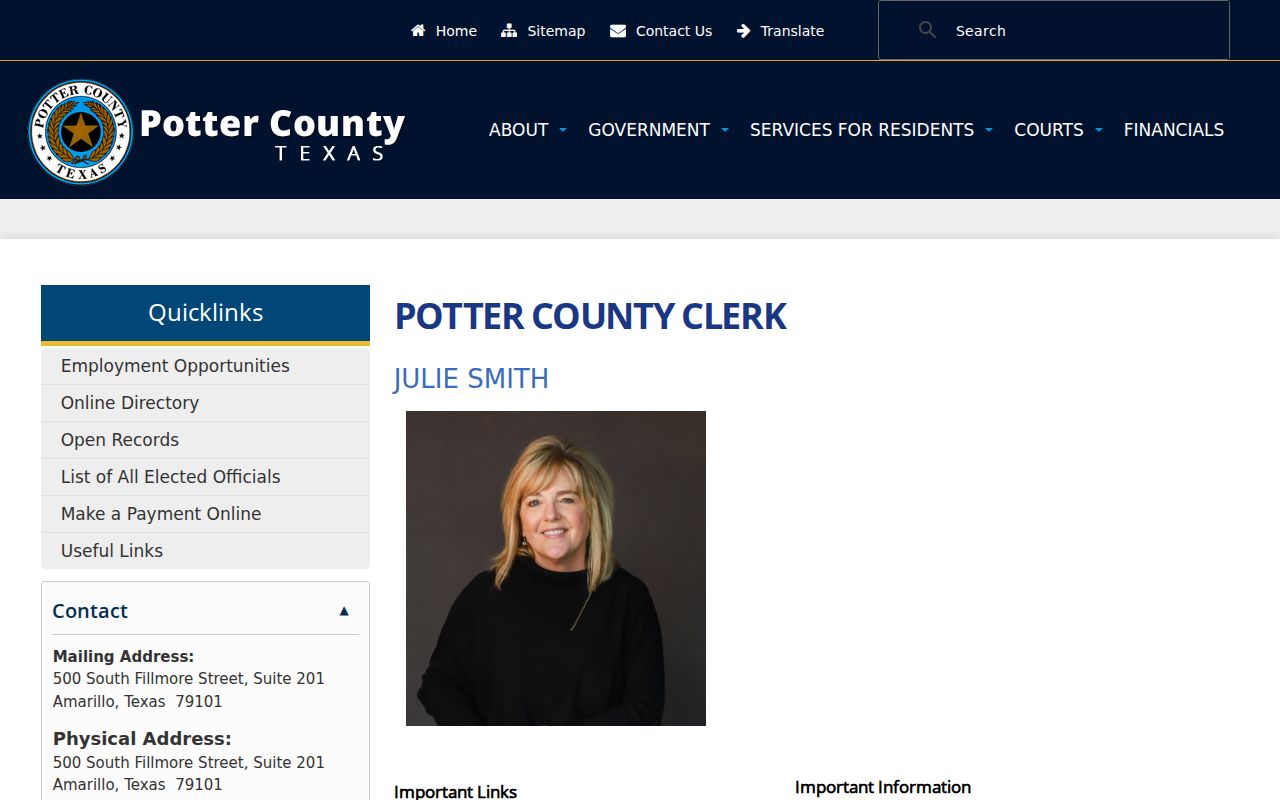
That office separates Potter County misdemeanor case custody from the district felony files one may find elsewhere in the same courthouse complex.
How to Search Case Records
Use the county docket page to see scheduled activity in a chosen court and date. Do not mistake that calendar for the full history of a Potter County criminal case. Re:SearchTX can help discover metadata or documents from participating courts, but coverage and PDF access vary. For a full historical file, ask the correct local clerk for the register of actions, charging instrument, disposition or judgment, and sentence.
Case numbers provide the strongest match. If only a name is known, narrow the search by court and filing year, then compare the charge and dates. A date of birth may not be public in the case view. Never use a common name alone to connect a Potter County criminal case to a person.
- Identify district, county, or municipal jurisdiction from the charge and court notice.
- Open the county docket or re:SearchTX and choose the relevant court.
- Search by exact case number when possible, or use a full party name and filing year.
- Read each event in date order and distinguish settings from completed hearings.
- Contact the Potter County clerk that owns the file for copies or certification.
| Field Label | Type | Required | Notes |
|---|---|---|---|
| Party name | Text | Search route | Use full spelling and verify the court. |
| Case number | Text | Alternate route | Best exact match when known. |
| Court | Select | Needed to narrow | Choose the participating Potter County court. |
| Filing year or range | Date or filter | As needed | Reduces same-name and old-case results. |
| Document access | Account level | Varies | Metadata and PDFs depend on clerk participation and permissions. |
Potter Criminal Dockets Are Calendars
The Potter County Court Dockets page presents court selections and scheduled matters. It is valuable for locating a setting, but silence on a date does not mean the case never existed or has no disposition. A case may have moved, ended, been sealed, or simply fall outside the displayed date.
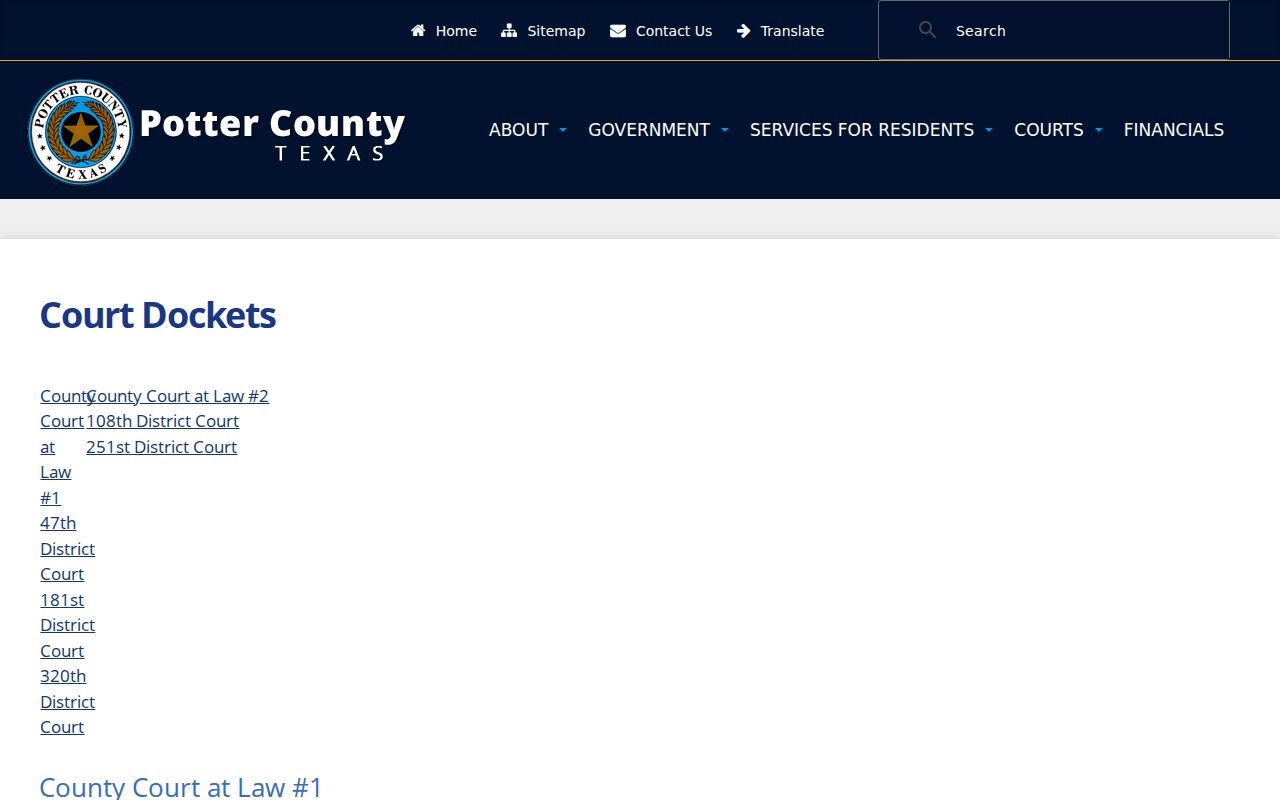
The docket image reinforces the distinction between a calendar view and the Potter County criminal case file kept by the clerk.
If no online result appears, provide the clerk with the defendant name, approximate filing year, court, and any known case number. Ask whether the matter is archived or access-restricted. This fallback is more reliable than treating an empty web search as proof that no case exists.
What the Case File Shows
A Potter County criminal file records the judicial path, not just the arrest. Its charging instrument states the formal accusation. The docket or register of actions lists filings and events. Orders resolve motions, and the judgment states the disposition and sentence. Online views may omit documents that are available at the counter or may restrict material due to privacy and court rules.
Ask for the smallest set that answers the question. The docket sheet establishes chronology, the charging instrument shows what was filed, and the judgment and sentence establish the result. Pleadings and motion orders add context when a Potter County criminal case took a less direct path.
| Case Number & Court | The local identifier and the court with jurisdiction. |
|---|---|
| Charging Document | Complaint, information, or indictment stating filed allegations. |
| Docket Entries | Dated filings, settings, motions, orders, pleas, and trial events. |
| Hearing Dates | Scheduled and completed court appearances, read in context. |
| Disposition & Judgment | Dismissal, acquittal, deferred adjudication, conviction, or another result. |
| Sentence & Conditions | Custody, fine, restitution, and community-supervision terms made public. |
Read Potter Criminal Dispositions
A disposition is the outcome of a charge. It must be read charge by charge because one Potter County criminal case can contain several allegations with different results. A dismissal ends a charge without conviction but does not automatically erase an older booking. Deferred adjudication delays a finding while community supervision is completed; Texas treats it differently from a conviction, though public DPS rules may still expose it unless nondisclosed.
- Complaint
- A sworn allegation used to support a charge or warrant.
- Information
- A prosecutor-filed charging instrument often used for misdemeanors.
- Indictment
- A grand jury's formal accusation in a felony case.
- No-bill
- A grand jury decision not to approve the proposed indictment.
- Acquittal
- A not-guilty result after adjudication.
For a missing Texas DPS outcome, obtain a certified disposition from the Potter County court of jurisdiction. DPS says an ordinary photocopy is not enough unless it carries the court's embossed seal.
Stages of a Criminal Case
After arrest and booking, Potter County holds prompt magistration for warnings, probable cause, and bond. The jail streams a daily 11 a.m. proceeding it labels arraignment, but that first appearance is not the final case record. A complaint supports early action. A felony normally proceeds by indictment unless indictment is lawfully waived; a misdemeanor may proceed by complaint or information.
Next come arraignment or plea, discovery, motions, settings, and either a negotiated plea or trial. The court then enters a disposition, judgment, and sentence, followed by any appeal. Timelines vary by case, so the docket dates should describe what occurred rather than support an invented estimate.
Case flow: Charges Filed › Arraignment › Pretrial › Plea or Trial › Disposition › Sentencing
re:SearchTX Potter Case Limits
re:SearchTX is the statewide participating-court discovery layer. It can surface Potter County criminal case metadata and, depending on access, linked documents. Coverage, account rights, and document charges vary. It does not override a Potter County clerk's custody of the original file or the court's access restrictions.
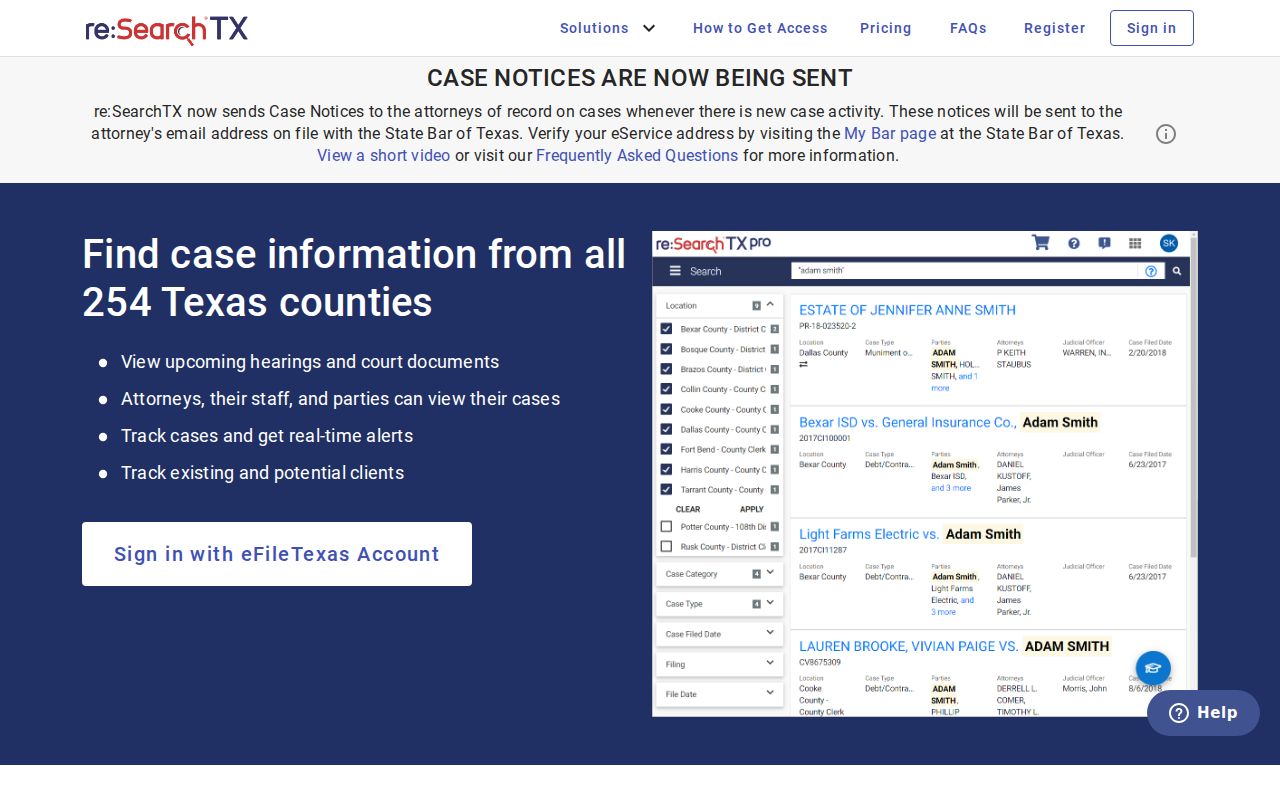
The statewide interface is best used to locate a lead. Confirm court, case number, disposition, and document status with the local Potter County clerk before relying on the result.
When the portal shows only metadata, request the docket sheet and key orders. When it shows no result, try the county docket and clerk. Older, archived, sealed, or nonparticipating material may require direct inquiry.
Potter Criminal Case Pipeline
The 47th Judicial District Attorney handles Potter County felony prosecution from law-enforcement intake and grand jury work through hearings, pleas, trials, sentencing, post-verdict matters, and appeals. The office does not replace the clerk as record custodian. Its role explains why an arrest label may change before an indictment is filed and why the court file, rather than the booking entry, controls the formal charge.
The official 47th District Attorney page describes that prosecution path and lists the office at 350 SE 6th Avenue, Suite 3B, Amarillo, with phone (806) 379-2325.
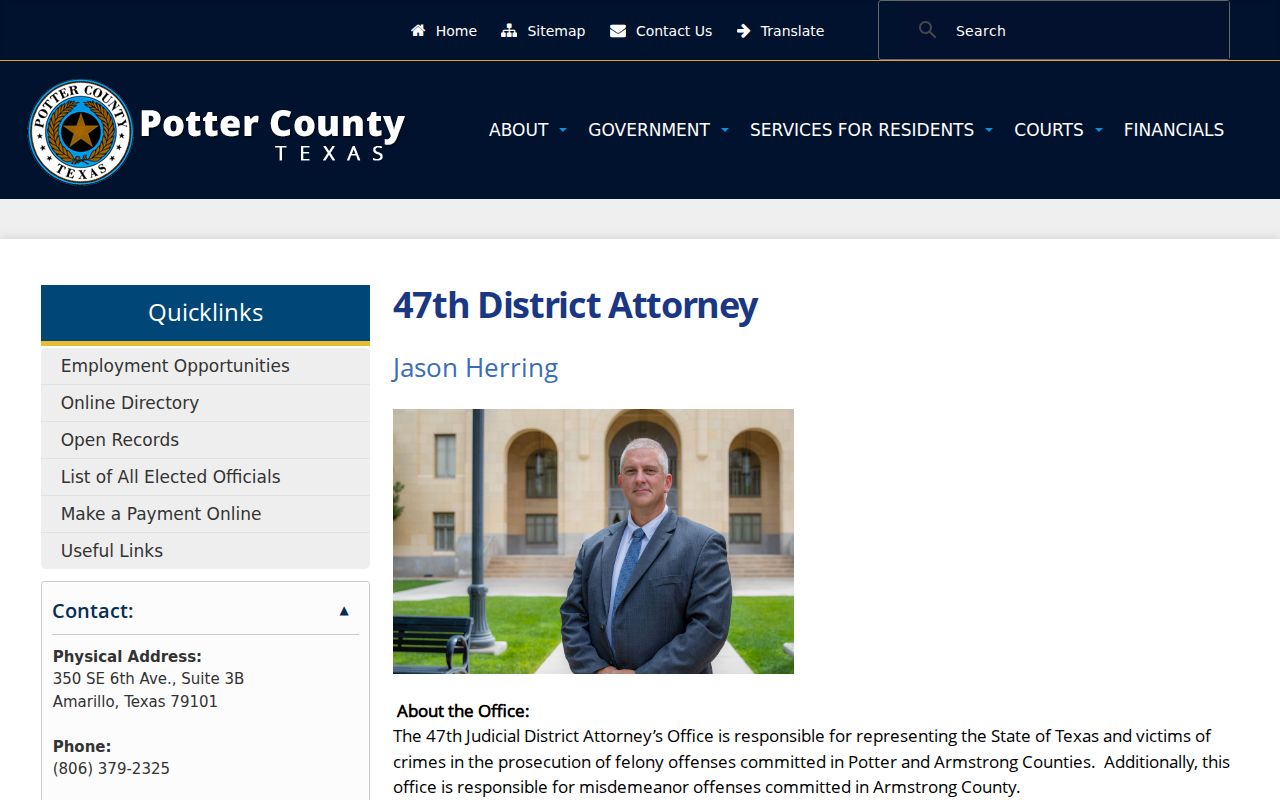
The DA source provides useful process context, while certified Potter County criminal case records remain with the District Clerk.
Access & Restrictions
Texas court records follow judicial access and sealing rules rather than assuming every document is an ordinary Texas Public Information Act record. Juvenile information, certain victim or minor identities, medical detail, confidential identifiers, sealed or nondisclosed matters, and expunged material may be hidden or redacted. An online docket can show less than a file available under court rules, but counter access does not make every attachment public.
Texas court rules and standards provide the state access framework. Government Code Chapter 411 controls criminal-history dissemination and nondisclosure, while Code of Criminal Procedure Chapter 55 governs qualifying expunctions. Ask the clerk whether a Potter County case is archived, sealed, or available only through a specific request process.
Use a narrow request. State the court, case number, party name, filing year, and exact document sought. Avoid asking staff to conduct broad research. A certified judgment serves a different purpose and costs more than an informal screen view. Verify the current fee schedule before ordering.
Redaction also varies by document. A public docket may identify an event while the related filing protects a birth date, victim identity, medical fact, or other confidential detail. Restricted access does not prove that a Potter County criminal case ended in any particular way. Ask the clerk what can be released and request the final judgment when the outcome is the key fact.