
Running a Sex Offender Check in Potter County
Texas DPS administers the Texas Public Sex Offender Registry under Chapter 62 of the Code of Criminal Procedure. Local law-enforcement authorities collect and verify registration data, while DPS publishes most fields that state law makes public. For Potter County, the DPS search is the main public statewide channel. The Potter County Sheriff’s Public Records page links users to it rather than maintaining a separate county profile database.
Begin with the location connected to the safety question. A county filter can capture Potter County results, while an Amarillo, Bishop Hills, ZIP, street, radius, or map search may answer a more local question. Amarillo spans Potter and Randall counties, so the city name alone does not prove the listed address lies in Potter County. Search nearby areas when the location sits close to a border and use the displayed registering agency as another check.
The Texas Public Sex Offender Registry supplies the official search form.
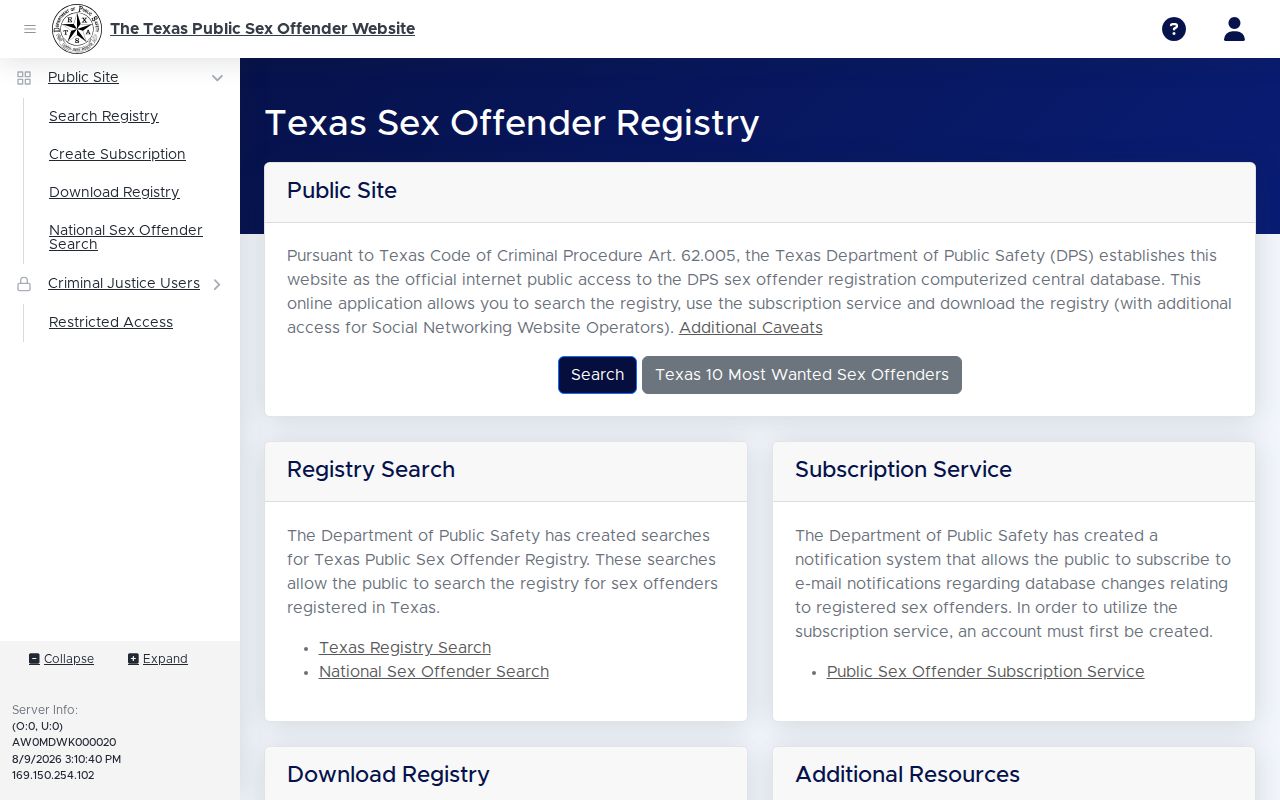
The form’s several name and geographic routes make it useful for both a known-person search and area awareness.
Potter County Sex Offender Offices
Where a person lives determines the local registration route. A Texas resident inside a city generally registers with that city’s law-enforcement authority. Someone outside a city generally registers with the county authority. Amarillo Police identifies its Sex Offender Registration Office as Room 361 on the police department’s third floor. Potter County’s public-record page directs the public to the DPS registry for published data.
The local Potter County office is not a substitute search engine. Use it for registration appointments, corrections, and suspected compliance problems tied to that authority. A public profile can show the registering agency and verification information, which helps route a concern. No separate Bishop Hills registration office was confirmed in the official research, so residents should confirm the designated authority with PCSO instead of assuming the Amarillo office has jurisdiction.
Amarillo Registration Office
Sex Offender Registration Office
Room 361, third floor
Amarillo Police Department
Use for city-resident registration and compliance matters.
Potter County Route
Potter County Sheriff
13103 NE 29th Avenue
Amarillo, TX 79111
Confirm county-authority registration matters through PCSO.
Searching the Texas Public Sex Offender Registry
The Texas DPS portal supports both person-based and place-based searches. Choose the narrowest reliable details, but avoid assuming that a partial name match identifies the right person. Address and map tools are better suited to neighborhood awareness, while the Potter County field can set a broad county boundary. The live interface controls the exact radius choices, so select from the options it displays rather than relying on an old list.
- Open the official DPS registry and review its conditions of use before starting the Potter County sex offender check.
- Search by name, or use an address, city, ZIP code, Potter County, map, radius, or higher-education mode when that field fits the question.
- Compare the result list with the available physical description, location, aliases, and registering agency. Do not rely on a name alone.
- Open the profile and read registration status, risk level, offense, dates, location, supervision, and verification fields as a whole.
| Search field | Type | Use and limits |
|---|---|---|
| Name | Text | Use last and first name; the live form may permit partial values. |
| Address | Text | Enter a street or location in the format the portal accepts. |
| City | Text or dropdown | Use Amarillo or another locality, while checking the county boundary. |
| County | Dropdown | Select Potter County for a countywide result set. |
| ZIP Code | Text | Use a five-digit geographic filter. |
| Map and radius | Interactive map and dropdown | Pan, zoom, or choose a current radius shown by the live interface. |
| Higher education | Search mode | Use when the portal exposes a campus-related search. |
| Submit or Clear | Buttons | Run the query or reset the fields. |
Reset the form before changing from a name search to an area search. That keeps an old field from narrowing the Potter County registry results by mistake.
Three Potter County Registry Layers
DPS, the U.S. Department of Justice national search, and Potter County’s local authorities serve different roles. Texas DPS is the source for public Texas profiles. The National Sex Offender Public Website, or NSOPW, searches participating state, territorial, and tribal public registries for a wider geographic check. The local registration office deals with address verification, appointments, corrections, and suspected noncompliance. A thorough safety search may use all three without treating them as duplicates.
The National Sex Offender Public Website adds the cross-state, federal, and tribal search layer.
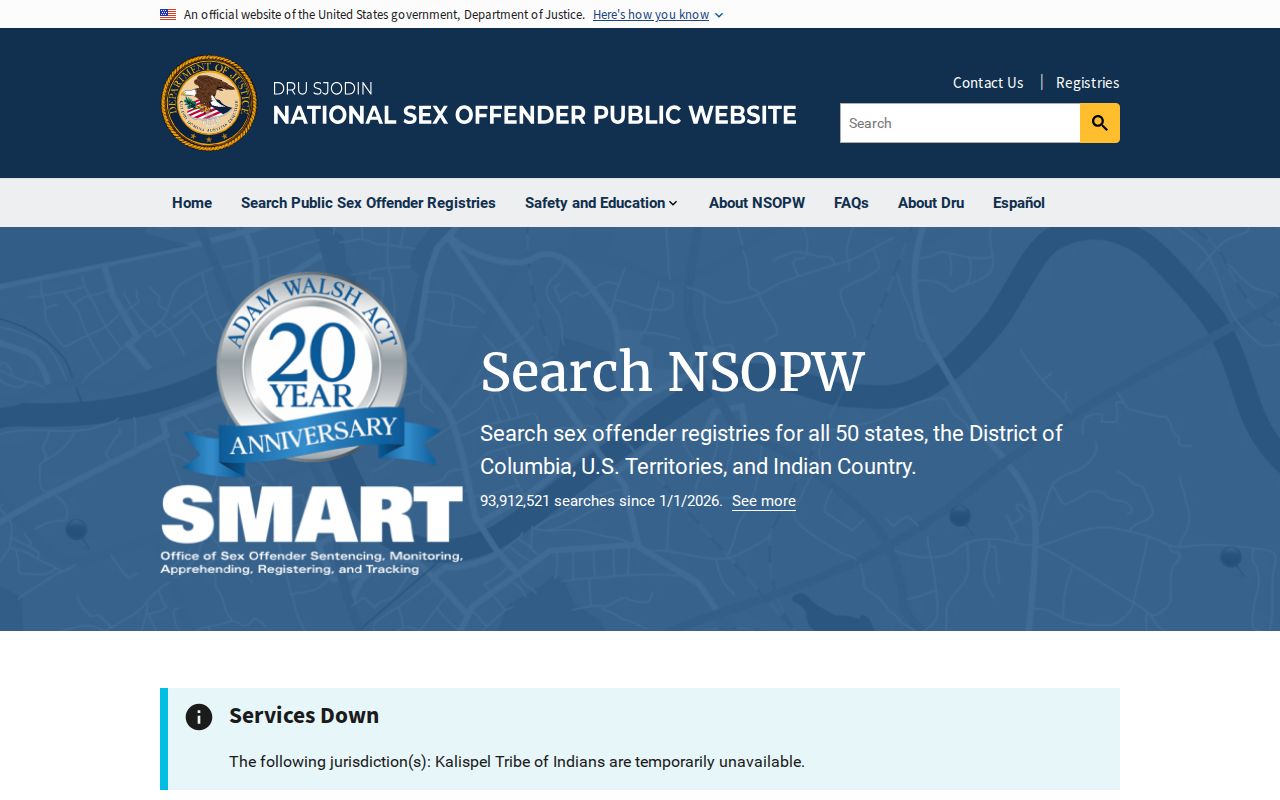
It is most useful when a name or location question extends beyond Texas, while DPS remains the direct source for Texas registry detail.
What a Registry Profile Shows
A Potter County registry profile combines identity, location, offense, risk, and verification data released under Texas law. Fields can help distinguish people with similar names, but every value should be read in context. The listed offense and conviction or adjudication date explain the registration basis. Risk level concerns the Texas assessment and notification framework. It is not a new finding of guilt and should not be treated as a simple ranking of people.
| Name and aliases | Public identity names used to help distinguish the listed person. |
|---|---|
| Photo and description | Photograph plus public sex, race, height, weight, hair, eye, birth, and identifying-mark details when released. |
| Address or location | Registered address or geographic location and the responsible registration authority. |
| Offense and case facts | Offense, statute, conviction or adjudication date, punishment, and public victim-age category where allowed. |
| Texas risk level | Low, moderate, or high under the Texas risk assessment process, not a federal tier label. |
| Status and verification | Registration and supervision status, release information, and verification data made public by DPS. |
| Other public traits | Qualifying vehicle, scar, mark, or tattoo data may appear when Chapter 62 permits publication. |
The public page omits Social Security and driver-license numbers, phone numbers, online identifiers, employer name and contact data, confidential DPS fields, and victim-identifying information. A juvenile court may order juvenile registration information nonpublic.
The DPS registry FAQ explains the line between public and protected information.
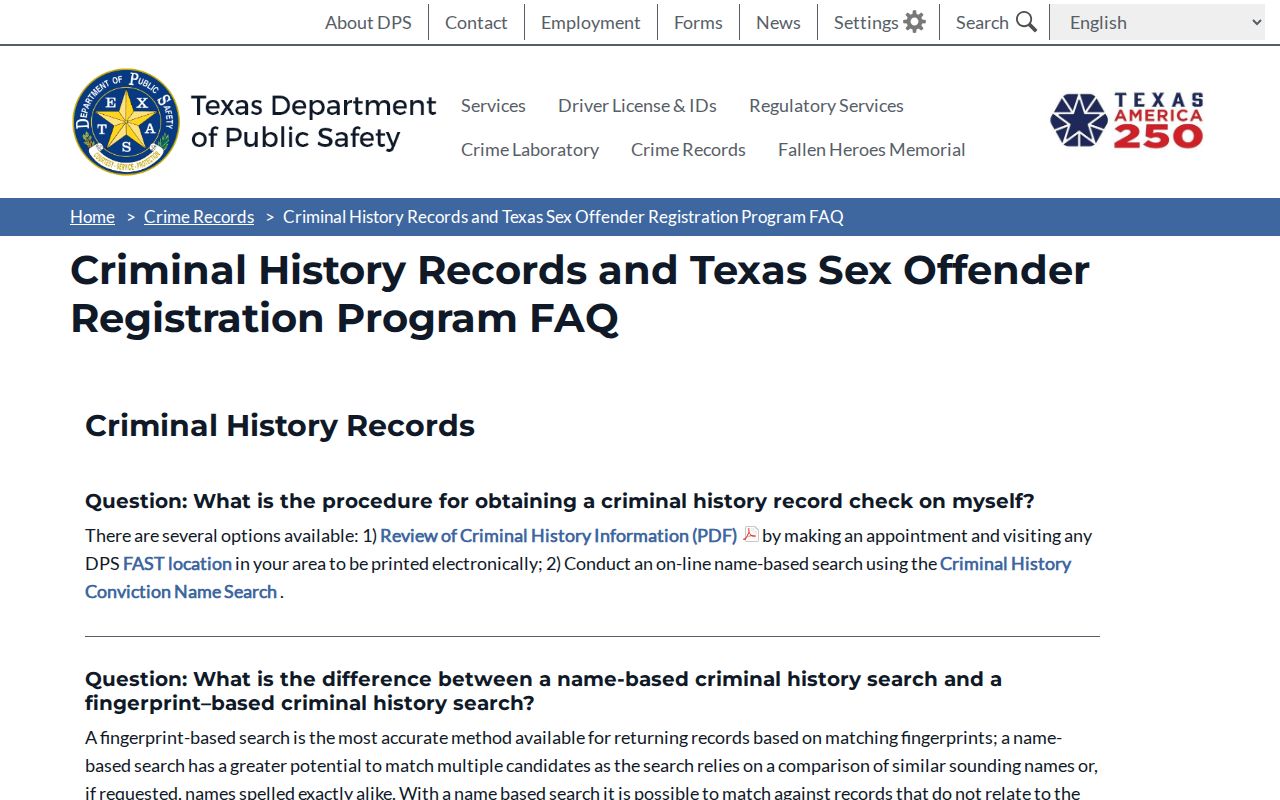
That distinction helps readers use public fields without expecting the profile to expose protected personal data.
Potter County Registry History
Texas sex offender registration began in 1991. The Legislature later made the program retroactive in defined circumstances. DPS explains that reportable convictions or adjudications dating to September 1, 1970 may fall within the system when the person remained in the justice system for that offense on or after September 1, 1997. That history helps explain why a Potter County registry result can relate to a case far older than the public web portal.
Retroactivity is statutory, not a reason to assign duties from a case label alone. The current offense, judgment, discharge facts, and Chapter 62 provisions control. Local agencies collect and verify the information, while DPS publishes fields allowed by law. The Texas Sex Offender Registration Program overview describes that state and local structure.
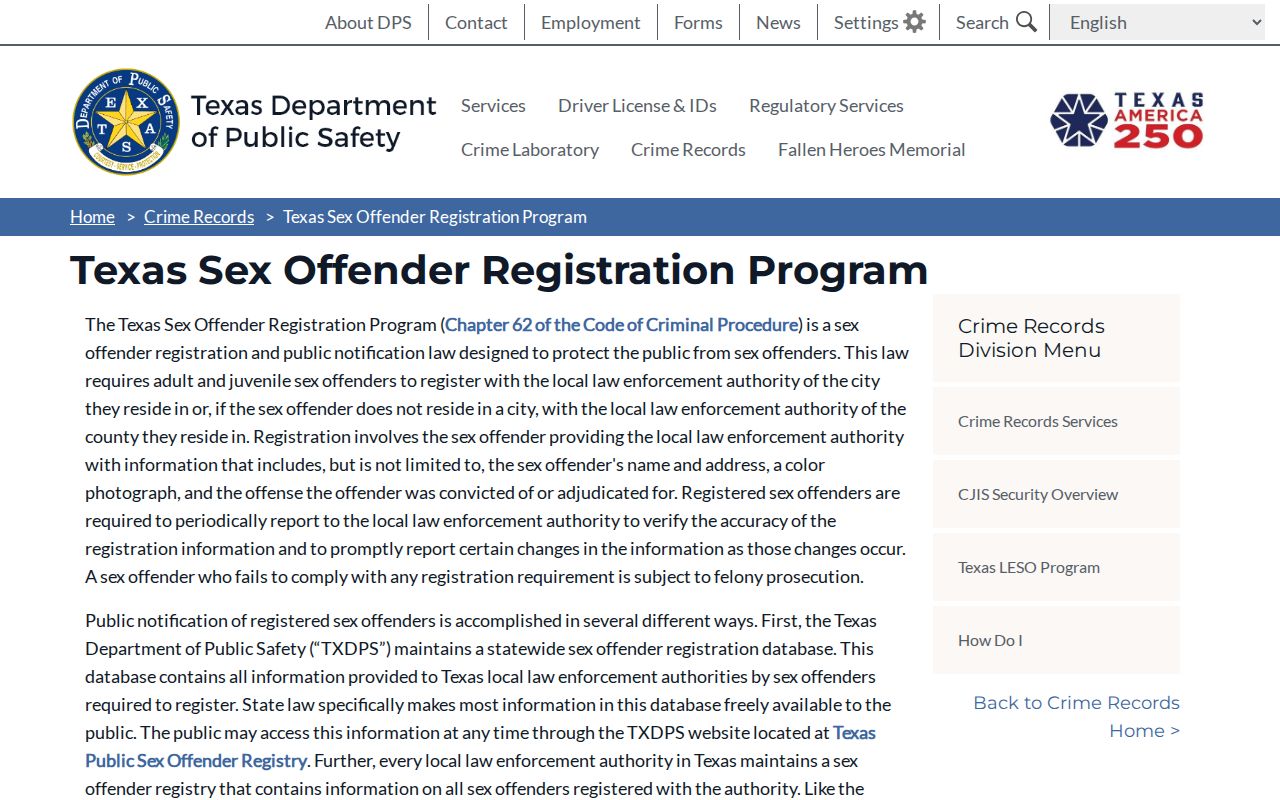
The official program page provides the sound starting point for understanding why DPS and local Potter County authorities each hold part of the process.
Registration Requirements and Levels in Texas
Texas uses low, moderate, and high risk levels through its own assessment process. Those categories are not the federal Tier I, Tier II, and Tier III labels, and they do not by themselves set the length of every registration duty. Chapter 62 generally supplies ten-year-after-discharge duties for specified offenses and lifetime duties for listed serious or repeat circumstances. Juvenile provisions and early termination rules can also affect an individual duty.
| Texas concept | Duration or role | Public meaning |
|---|---|---|
| Low, moderate, or high | Risk assessment category | Relevant to notification; not a federal tier or a guilt ranking. |
| Ten-year duty | Ten years after discharge under the applicable Chapter 62 rule | Applies only to offenses placed in the statutory ten-year category. |
| Lifetime duty | Lifetime when the statute lists the offense or repeat circumstance | Must be confirmed from the current law and case facts. |
| Civilly committed or high risk | Notification role, not one universal term | DPS may mail English and Spanish postcards in the immediate community when statutory triggers apply. |
Verification frequency was not stated as one rule for each risk label in the Potter County research, so it should not be invented. The responsible local authority can answer appointment and compliance questions. Use the current Texas Code of Criminal Procedure Chapter 62 instead of assigning a term from an offense nickname.
Nonpublic Potter County Juvenile Registration
Not every registration record is public. Texas law permits a juvenile court to order juvenile registration information nonpublic. Victim-identifying data also remains protected. A missing Potter County result therefore does not prove that no duty, court order, or law-enforcement record exists. The public portal is only the public portion of the registration system.
The same rule cautions against filling gaps with rumor or third-party data. For a lawful correction or compliance issue, contact the registering law-enforcement authority. DPS controls the state public record, and the local agency verifies data tied to its registrants. The Texas Government Code Chapter 411 provides the related criminal-history access and nondisclosure framework.
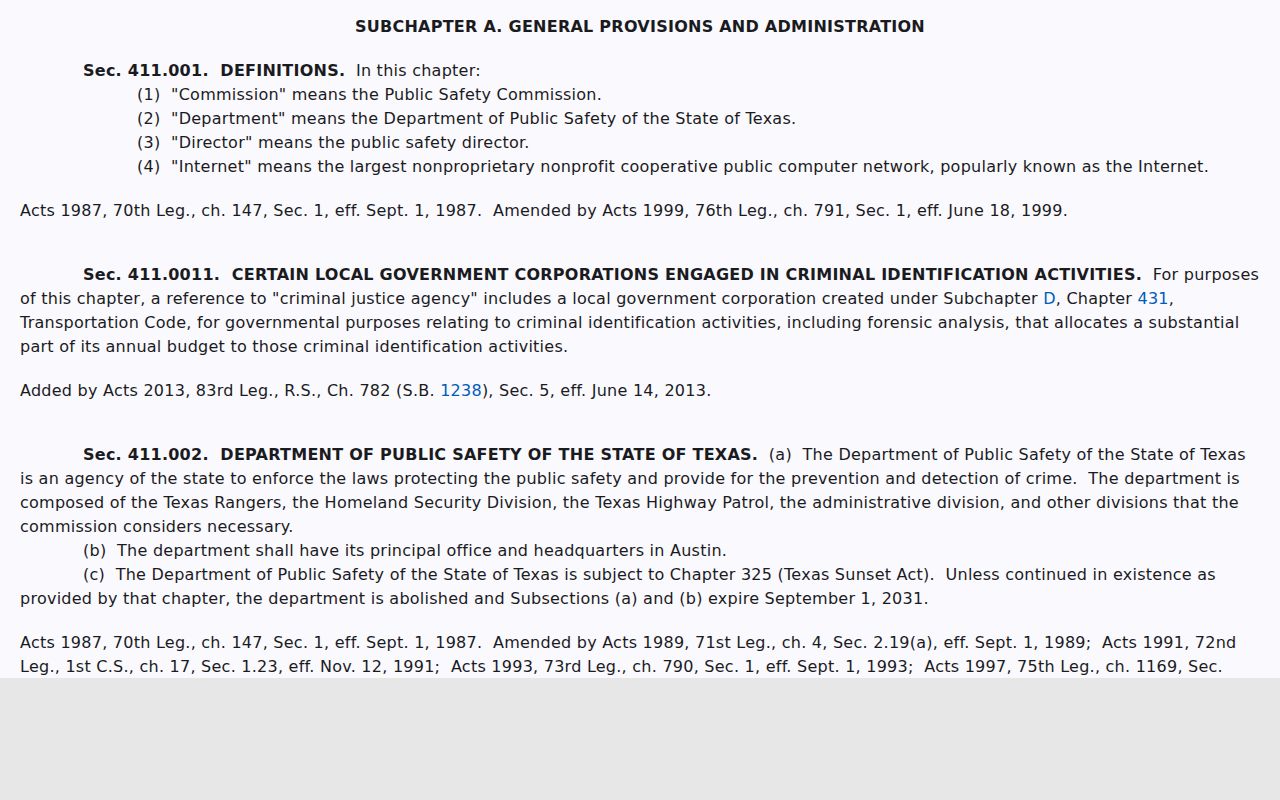
The statute source underscores that public access and authorized government access are not always the same.
Outdated Potter County Registry Address
If a Potter County address seems stale, first read the profile’s status, verification data, and registering agency. Compare the location through the map or address search, and make sure an Amarillo result is in the correct county. Do not visit the address or contact the listed person. A public user does not have the full confidential file and should not try to conduct a compliance investigation.
Report suspected Potter County noncompliance to the law-enforcement agency responsible for registration. For an Amarillo city resident, that may be APD’s Room 361 registration office. For an unincorporated Potter County address, use the county authority. Emergencies go to 911. Routine public-profile corrections and compliance questions belong with the responsible office, not NSOPW, because the national service displays data supplied through participating jurisdictions.
Lawful Use and Community Notification
The registry supports personal, family, and community safety. Texas may use more than a website. When statutory triggers apply to a civilly committed or high-risk person, DPS mails English and Spanish postcards to homes and businesses in the immediate community. That notice does not authorize contact, threats, retaliation, or private enforcement. Use the data to make calm safety plans and send suspected violations to law enforcement.
Use registry data lawfully: Texas Code of Criminal Procedure Chapter 62 warns that misuse of registry information can be a crime. Do not threaten, harass, intimidate, or contact a listed person or household.
A Potter County profile should not be used as a general character judgment. The DPS index of crime-record laws links the current registry and criminal-history authorities. Confirm location and status through official sources, respect every protected field, and call 911 only for an emergency. For a nonurgent suspected compliance issue, provide the responsible registration agency with the precise location and public profile details without confronting anyone.